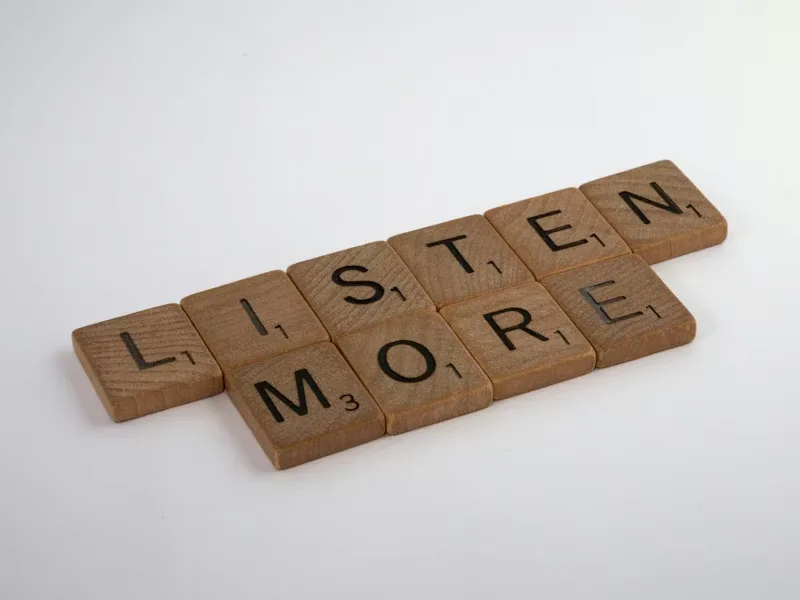
Sound familiar to any of you? Does your spouse tune you out?
Somebody has opined that women use perhaps 2x as many words each day as men. My bride will tell you that it iS true because she often has to tell me twice because of my listening problem.
Another interesting observation is that all too frequently one of you simply marches in and begins a conversation regardless of what your mate is doing. (An easily remedied situation which can be fixed by asking, "Is this a good time to talk?" I really appreciate it when Barb does that...gives me time to get to a stopping point in whatever it is I'm doing so I can give her my undivided attention.
And another thing I'm guilty doing is doing two things at once. I can multi-task and listen at the same time. I've discovered it's rude to keep on doing whatever I was doing while listening to her. Since we have come to an agreement to ask for permission for a conversation, I have also agreed to stop doing whatever else I was doing and focus on her with my full attention. Wish I'd learned that earlier.
Selective hearing is a common issue among married couples. Maybe your spouse only hears what he or she want to hear. It’s frustrating to realize your communication only seems to land occasionally.
You might want to talk to your spouse about certain topics, interactions, or events they’re not interested in. Or, you might have a honey-do list you’d like them to complete. The problem is, often you will get tuned out. So what can you do?
Is Your Spouse Deliberately Tuning You Out?
First, consider whether your spouse is deliberately tuning you out. It’s true that some people choose not to listen to one another. But most likely, your spouse isn’t being malicious.
Maybe your spouse is a confident multitasker who struggles to listen well despite best intentions. Some people can multitask well, meaning they can execute a task and engage in a conversation at the same time. Other people can’t multitask effectively, and this can affect their ability to absorb what you say.
Gender differences can also affect your ability to listen. Men and women just listen differently. We know there are physiological brain differences in the ability to listen to conversations.
It’s possible your spouse just isn’t listening to you; however, the most likely scenario is that they just aren’t listening well. Luckily, there are ways to address the issue without deepening conflict. Let’s take a look at one of our favorite approaches.
Communicate in Writing
When listening is difficult, putting your communication in writing can be a game changer. If your spouse struggles with focus, a note gets your message across. Barb occasionally writes notes for me, in addition to asking if 'this' is a good time to talk, and it made a major difference in our interactions.
When I’m working in my office, she drops off little notes that help me stay on top of our agenda for the day. Notes help me know when we need to have a discussion. They also serve as a safety net to make sure information is transferred as intended.
If conversations about listening tend to upset your spouse, writing to them could also help you express your concerns. Let them know how you feel, gently and honestly. This could make a difference in how they listen in the future.
Learn When They Listen Best
Your spouse is probably a better listener under certain circumstances. For instance, maybe they listen well when all electronic distractions are switched off. They might be more focused when working with their hands, such as crafting or sketching. Maybe they listen better while in motion, like on a walk. The Pause/Record function on TV can also be your best friend.
Other factors can disrupt effective listening, such as:
- Work-related overwhelm
- Sleep deprivation
- Hunger or thirst
- Parenting obligations
- Time of day or night
- Caring for a sick family member
- Grieving a major loss
- Deep engagement in a hobby or activity
It’s important to both of you for communication to be a win-win. So set your spouse up to win whenever possible. Pay attention to the times when they don’t listen well versus the times they do, and try to hold your conversations for the better times.
Listening Well is Just One Step
Being able to listen well and understand your spouse is just one step along the path of lifelong love. When you’re an excellent listener, you can then tune into your spouse’s primary Love Languages. That's a good start, but it doesn’t stop there.
It’s one thing to know your spouse’s Love Language, but it’s another thing entirely to understand how they need to receive it. A new book, The Love Language That Matters Most, mentioned here before, co-written by Les and Leslie Parrott and Dr. Gary Chapman, is a deep dive into the nuances of each Love Language so you can truly hear and love your spouse in the ways they need.
It's worth getting your personal copy today. Learn to be more curious in conversations, use your listening skills, feel genuine empathy for your spouse. The dividend of your spouse demonstrates knowing you have prioritized your chats is hard to measure.