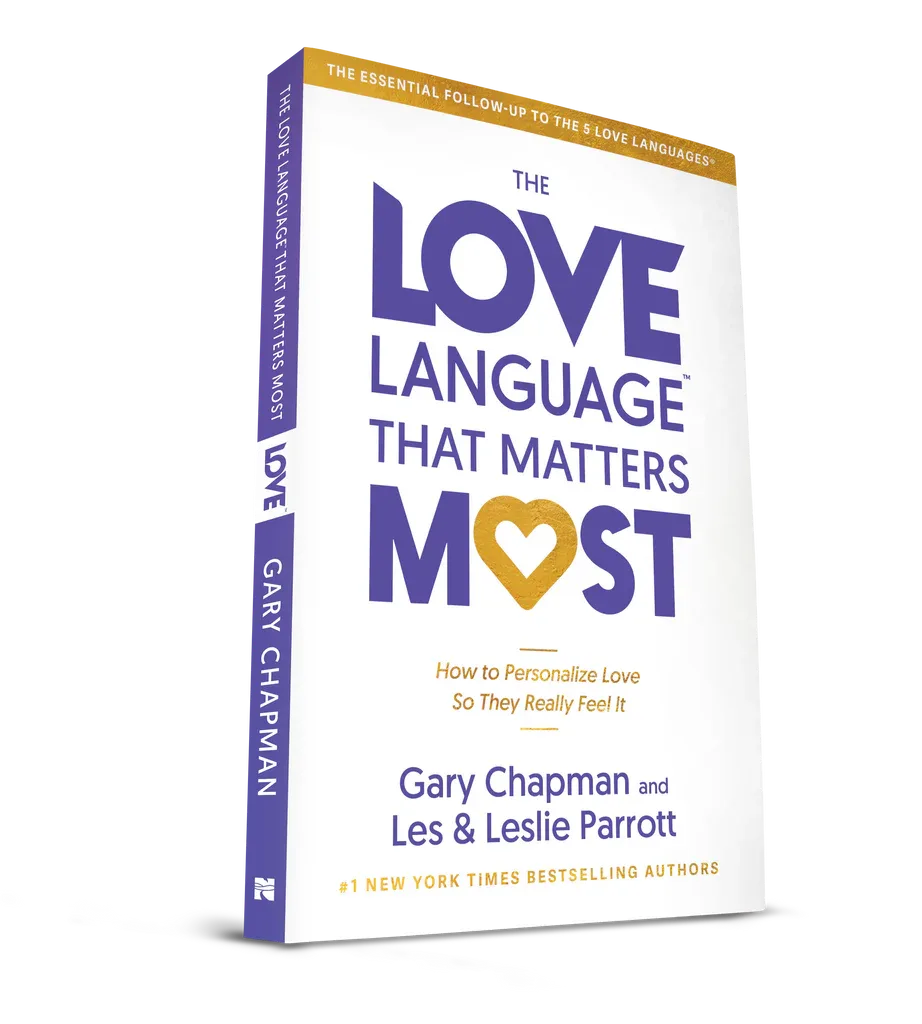
I love me some Les and Leslie Parrott and Gary Chapman. Here's a dynamite article which will resonate with many of you.
What do you do when your spouse doesn’t respond to their Love Language™?
If you’re familiar with Dr. Gary Chapman’s 5 Love Languages®, you might already know your spouse’s Love Language™. Maybe you even feel fluent in your spouse’s primary languages. But what happens when your spouse doesn’t respond the way you hoped?
To quickly recap (or get you up to speed) the 5 Love Languages are:
- Acts of Service
- Receiving Gifts
- Quality Time
- Words of Affirmation
- Physical Touch
You tend to naturally lean toward two primary Love Languages, which fill your “Love Tank” and help you feel fulfilled in marriage. It’s likely you and your spouse favor different Love Languages. Still, maybe you’ve put in the work to learn—yet still seem to be missing the target.
You’re trying to do everything “right,” but it’s frustrating when your spouse doesn’t respond the way you expect. What you may not realize is that Love Languages can get lost in translation. So what does that look like?
Loving Gestures Seem to Disappoint Your Spouse
It can feel confusing and disorienting when you do your best to help your spouse feel loved, yet he or she seems disappointed in your efforts. You know they appreciate Acts of Service, for instance. Let’s say you want to surprise by cooking an extravagant dinner.
When your mate come home from work, take one look at the dinner table and sag. It’s almost as though the weight of the world is on his or her shoulders. But you went to all that trouble to cook an elegant dinner, so why isn't it appreciated?
What you might not realize is that after a long day, your spouse comes home thinking about all the work which needs to do after dinner. The sink is overflowing with dirty dishes. Because of your work schedule, you go to bed early every night. Dishes are your spouse’s job, while you tend to cook. But this week, your spouse is in the middle of a demanding project and comes home exhausted every evening.
Cooking a complex meal is a beautiful Act of Service. But your spouse prefers acts that take work off her plate. In order for that Love Language to translate and land properly, it must lighten her workload, rather than adding to it.
Supportive Words Tend to Backfire
Let’s try another example: say your spouse is a softball enthusiast, and just joined a recreational team for the first time since college. You’re excited to watch the first game, and your spouse hits the field like never having left it. It’s so exciting to watch the high quality of play.
On the way to the game, expressed uncertainty about getting out there again dominates your conversation. You listened and offered support, which seemed to help. After all, your spouse loves Words of Affirmation. By the time you arrived at the field, your spouse was ready to play.
Now, they’re up to bat. Time to affirm your spouse again, just to make sure you fill that Love Tank. “You’ve got this, babe,” you shout. “Knock it out of the park!”
Instead, your spouse instantly tenses up, then strikes out. On the ride home, the conversation goes like this, “You know I don’t like being called out in public. That was embarrassing, and after that I couldn’t concentrate.” You don’t understand; didn’t you just say something loving and supportive? What gives?
It might be true that your spouse loves Words of Affirmation. But as in this example, if they’re introverted, they might not appreciate being put on the spot in public. Instead, keeping your encouragement private would have helped them feel more comfortable.
How Can I Master My Spouse’s Love Language?
Mastering your spouse’s Love Language means understanding the nuances of it. Performing a Love Language from your point of view means your spouse may not get the message. Instead, you need to know why a particular language works for your spouse, then approach it from their perspective.
A good idea on finetuning your Love Language gifts for your spouse may well be found right here.